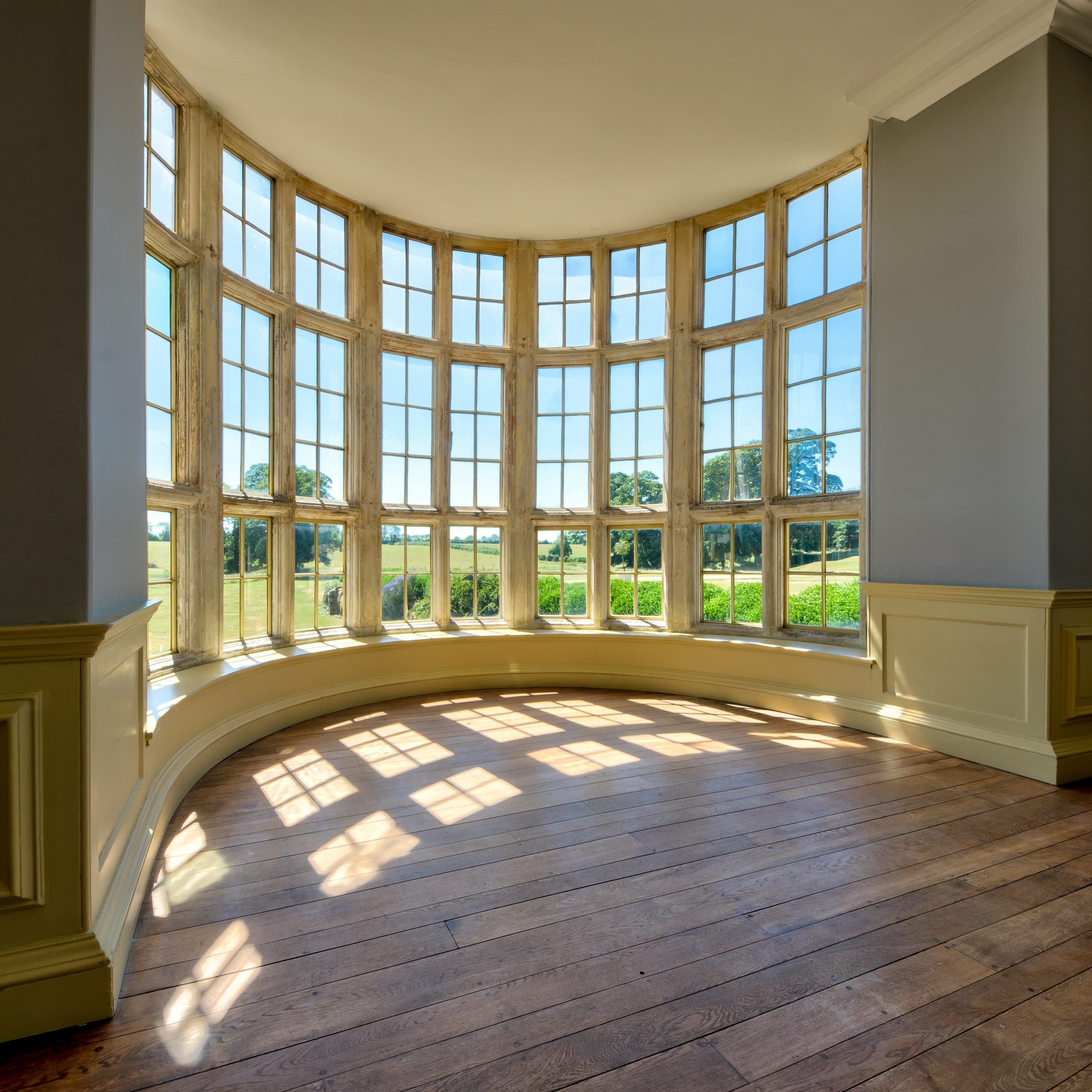
A bay is the window people ask us about most. It lets in the most light, it is usually the first thing you see from the street, and its angles make it the hardest window to dress well.
There is no single right answer, but there is a right question to start with: do you want the bay to read as one window, or as three or five separate ones?
Shutters treat the bay as one window
Plantation shutters are fitted on a frame that follows the shape of the bay, so each angle gets its own set of panels and the louvres line up all the way round. With the louvres open the room fills with light; tilted, you keep your privacy from the pavement without losing the daylight.
Tier-on-tier shutters split each panel in two, so you can fold back the top half and keep the bottom closed. That suits front rooms on busy streets, where people want daylight early on and privacy after dark.
Shutters cost more than blinds and take longer to make, usually about eight weeks, because each set is built for your bay. In return they last for years and need little more than a dust.
Blinds dress each pane on its own
With blinds, each window in the bay gets its own Roman, roller or Venetian blind. It costs less, it is quick to make, and it lets you mix: blackout on the side windows of a bedroom bay, say, and a lighter fabric in the middle.
The weak spot is the corner. Where two blinds meet at an angle there is always a small gap, and in a bedroom that gap lets in early light. Fitting the blinds across the frame rather than inside the recess, with the headrails meeting neatly in the corners, closes most of it.
Curtains and a pole?
A bay pole with curtains is still a good choice for a large, formal room, and it pairs well with a sheer or a slim roller behind it. We do not make curtains, but we can measure the blinds to sit neatly behind one.
What we measure at a bay
- The width of every window and the angle where each one meets the next.
- The depth of the reveal, which decides whether a blind or shutter can sit inside it.
- Handles, stays and trickle vents that could catch a blind or stop a panel folding back.
- Radiators and window boards under the bay, which affect how long a blind can hang.
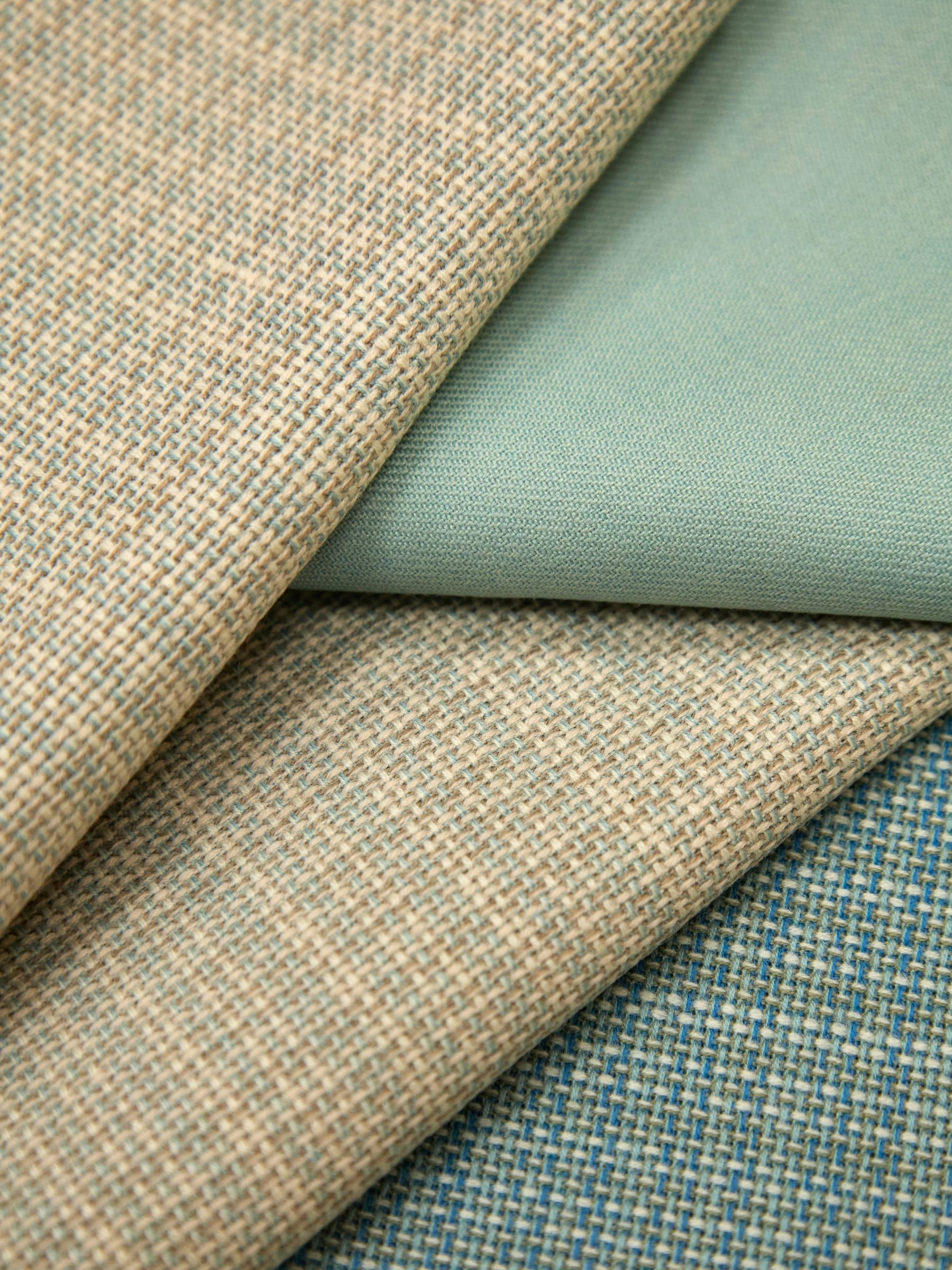
We bring samples of both to the measure, so you can see a shutter louvre and a Roman fabric side by side in your own bay before you decide.